
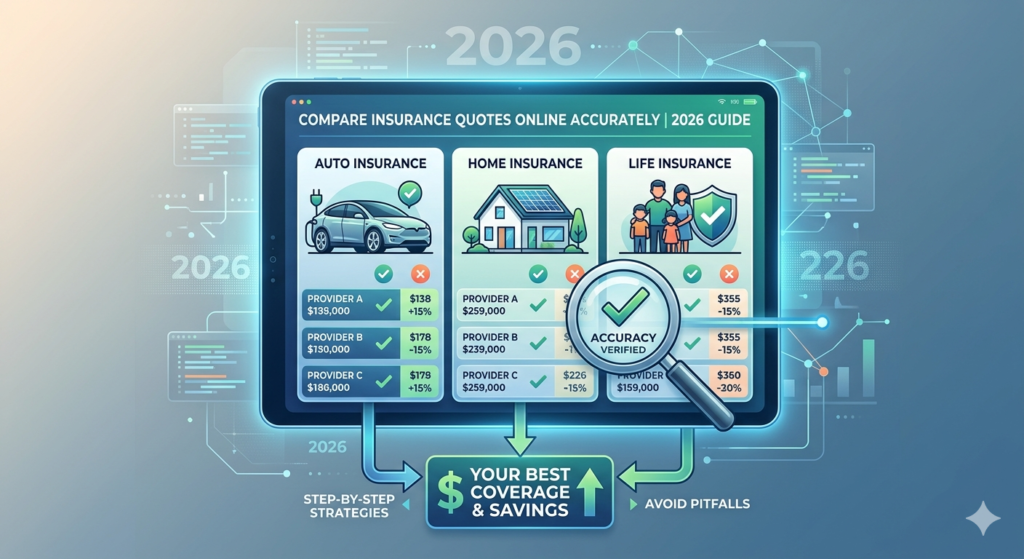
In an era when every dollar counts, accurately comparing insurance quotes online can transform your finances. With insurance premiums continuing to rise in 2026 due to inflation, climate events, and shifting risk models, smart consumers are turning to digital tools to find better deals. Yet many still end up with mismatched coverage or hidden costs because they skip critical steps — and a big part of that comes down to what factors affect insurance premiums and falling into common mistakes when choosing insurance that are easy to avoid once you know what to look for. The Real Impact of Smart Quote Comparison in 2026
Insurance isn’t a commodity — it’s a personalized financial safety net. The same person can see quotes differing by 40-70% across carriers because companies weigh factors like driving data, property risk scores, and even predictive analytics differently.
Key benefits of accurate comparison:
- Potential annual savings of $600–$1,200+ on combined policies
- Access to modern perks like usage-based insurance and instant claims apps
- Better alignment with your current life stage and risk profile
- Protection against sudden rate hikes at renewal
Consumer data shows that people who compare at least four quotes annually are far more likely to report satisfaction with both price and service.
Many consumers rush through the quoting process and choose the cheapest option they find. However, before making a final decision, it’s important to understand the full evaluation process. Our guide, How to Compare Insurance Quotes Before Choosing a Plan, explains the key factors to review before selecting an insurer, helping you avoid costly mistakes and coverage gaps.
Insurance Types That Benefit Most from Online Shopping
- Auto Insurance — Highly competitive with abundant data points
- Homeowners & Renters Insurance — Location-specific risks dominate
- Life Insurance — Term, whole, and no-exam options vary widely
- Health & Medicare Supplements — Plan networks and out-of-pocket costs differ
- Specialty Policies (boat, motorcycle, pet, umbrella)
Bundling multiple policies remains one of the strongest levers for discounts, often yielding 15-30% savings.
Your Ultimate 2026 Framework: How to Compare Insurance Quotes Online Accurately
Phase 1: Build Your Personal Insurance Profile
Before touching any website, create a detailed snapshot of your needs.
Gather these critical documents:
- Current policy declarations page
- Recent credit report (free weekly from AnnualCreditReport)
- Vehicle details, including VIN and usage patterns
- Home inventory list with estimated replacement values
- Driving record and claims history for the past five years
Pro move: Create a master comparison spreadsheet with tabs for each insurance type. Include columns for coverage limits, deductibles, and premium quotes. This prevents apples-to-oranges comparisons that plague most shoppers.
Finding the lowest premium doesn’t always mean you’re getting the best value. Smart shoppers use several proven strategies to reduce costs while maintaining adequate protection. Learn the Best Ways to Find Affordable Insurance Options Online and discover practical techniques that can help you save money without sacrificing important coverage.
Phase 2: Select Trustworthy Comparison Platforms
The digital marketplace has matured. Prioritize platforms that offer:
- Real-time quotes from dozens of A-rated carriers
- Transparent data privacy controls
- Mobile-friendly interfaces with quote-saving features
Recommended categories for 2026:
- Broad aggregators that pull from 50+ insurers
- Direct carrier tools with built-in comparison features
- Independent broker platforms for complex needs
Always verify the site is properly licensed in your state and check recent user feedback on independent review platforms.
Phase 3: Execute Consistent Quote Requests
Consistency is everything. Use identical coverage parameters across every quote:
- Same liability limits
- Identical deductibles
- Matching add-ons and exclusions
Enter your information carefully. Even small discrepancies in ZIP code entry or vehicle mileage can skew results dramatically.
Aim for 6–8 quotes minimum. In competitive categories like auto insurance, this often reveals hidden savings opportunities.
Finding the lowest premium doesn’t always mean you’re getting the best value. Smart shoppers use several proven strategies to reduce costs while maintaining adequate protection. Learn the Best Ways to Find Affordable Insurance Options Online and discover practical techniques that can help you save money without sacrificing important coverage.
Phase 4: Conduct Deep Analysis Beyond Price
Create a weighted scoring system that reflects your priorities:
| Evaluation Factor | Weight | What to Examine | Red Flags |
|---|---|---|---|
| Total Annual Cost | 30% | Premium + fees + potential surcharges | Unexpected add-on costs |
| Coverage Depth | 25% | Limits, riders, and actual protection | Major gaps vs current policy |
| Insurer Financial Rating | 15% | A.M. Best, Demotech, or S&P ratings | Below A- rating |
| Customer Experience | 15% | Claims satisfaction, app ratings | High complaint ratios |
| Long-term Value | 15% | Discount potential, renewal stability | Aggressive introductory rates |
Look for unique 2026 offerings such as AI-powered claims processing, telematics discounts, or climate resilience riders for homeowners in high-risk areas.
Phase 5: Validate and Stress-Test Quotes
Never accept quotes at face value. Take these verification steps:
- Request written confirmation of all quoted terms
- Ask specific “what if” questions about common claim scenarios
- Contact the carrier directly to verify key details
- Research the company’s complaint index with your state insurance regulator
Unique tip for 2026: Test the insurer’s mobile app and customer portal before committing. Download speed, ease of filing claims, and digital ID card access can make a huge difference in stressful situations.
As more consumers purchase insurance digitally, questions about privacy and security continue to grow. Before submitting sensitive personal information through a quote platform, read Is it Safe to Buy Insurance Online in 2026 to understand the safeguards you should look for and the warning signs that may indicate a risky provider.
Phase 6: Strategic Implementation and Ongoing Management
Once you select a winner:
- Confirm the new policy starts the day after your old one ends
- Secure all documents digitally
- Set calendar alerts for 45–60 days before next renewal
- Monitor for life changes that could lower your rates
Advanced Strategies That Most Guides Miss
Dynamic Rate Intelligence Insurance pricing algorithms update frequently. Shopping during off-peak periods (mid-week, non-quarterly renewal windows) can sometimes yield better rates.
Credit Optimization. In states where credit-based insurance scores are used, even a 30–50 point improvement can reduce premiums noticeably. Focus on lowering utilization and disputing errors.
Usage-Based and Telematics Programs. If you drive under 10,000 miles annually or have a clean record, these programs can slash costs by 20–40%. Compare the potential savings against privacy trade-offs.
Bundling with Emerging Players: Don’t limit yourself to traditional giants. Several insurtech companies now offer compelling digital-first experiences with competitive pricing.
Risk Reduction Tactics: Install smart home devices, take defensive driving courses, or add security features — then immediately request re-quotes to capture discounts.
Comparing quotes is only one part of the process. Before purchasing a policy online, it’s important to understand policy terms, exclusions, cancellation rules, and claim procedures. Our guide, What to Know Before Buying Coverage Online, walks you through the essential details every buyer should review before clicking “purchase.”
Common Traps That Cost Shoppers Thousands
- Changing coverage levels between quotes
- Ignoring policy exclusions that only appear in fine print
- Focusing solely on the monthly payment without calculating annual totals
- Failing to account for loyalty discounts, you might lose by switching
- Providing outdated information that leads to inaccurate quotes
Tools and Resources Worth Using in 2026
Beyond basic comparison sites, consider:
- Free credit monitoring tools that flag insurance score changes
- State insurance department portals for complaint data
- Independent financial planning apps that integrate insurance tracking
For high-net-worth individuals or unusual risks, working with an independent agent who has access to specialty markets can complement online research.
Privacy Protection While Shopping
Protect your personal information by:
- Using a dedicated email address for insurance quotes
- Reading privacy policies carefully
- Opting out of data sharing whenever possible
- Monitoring your credit reports after shopping sessions
Legitimate quote requests typically use soft credit pulls that don’t impact your score.
Frequently Asked Questions
How often should I compare insurance quotes? Every 9–12 months, or immediately after major life events like marriage, home purchase, or vehicle change.
Does shopping for quotes hurt my credit? Rate shopping is generally treated as a single inquiry when done within a short window.
Are online quotes as accurate as agent quotes? They can be more accurate when you provide consistent information, but complex situations may still benefit from professional review.
Can I really save money by switching companies? Most people who follow a disciplined process do save significantly in their second or third year of shopping.
Final Thoughts: Make an Accurate Comparison of Your Annual Habit
Learning how to compare insurance quotes online accurately puts you firmly in control of one of your largest household expenses. By following this structured approach, maintaining meticulous records, and looking beyond the sticker price, you’ll consistently find superior value while protecting what matters most.
Start building your comparison spreadsheet today. Gather your documents, set aside 45 minutes, and run your first set of quotes. The savings and peace of mind you’ll gain will make the effort worthwhile for years to come.
Online insurance shopping offers convenience, but it also creates opportunities for costly errors. To protect yourself from common pitfalls, explore 11 Critical Mistakes to Avoid When Buying Insurance Online in 2026, where you’ll learn how to spot red flags and avoid decisions that could leave you underinsured.
Related topics to read further
Price should never be the only factor influencing your decision. Coverage limits, deductibles, exclusions, and policy benefits can vary significantly between insurers. Our detailed guide on How to Compare Coverage Plans shows you exactly how to evaluate policies side-by-side to identify the strongest overall value.
One of the biggest challenges consumers face is determining whether they have enough protection. Buying too little coverage can expose you to financial risk, while buying too much can increase costs unnecessarily. Read How Much Insurance Coverage Do You Really Need? to learn how to calculate the right amount of protection for your situation.
For consumers shopping for life insurance, choosing between term and permanent coverage is one of the most important decisions. Our beginner-friendly guide, Term Life Insurance vs Whole Life Insurance for Beginners, explains the key differences, advantages, and disadvantages of each option so you can select the policy that best fits your long-term goals.