
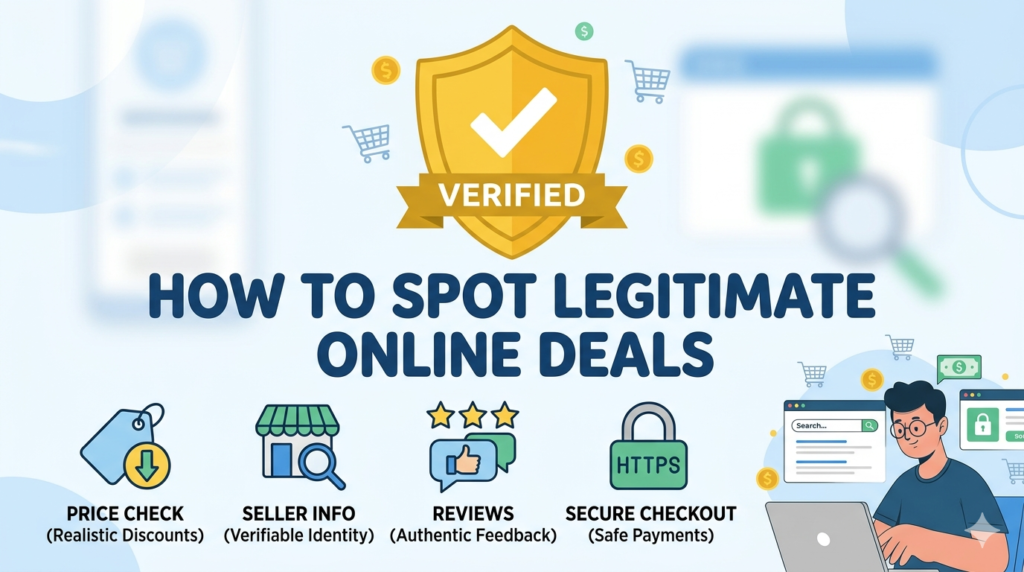
Online shopping can be a smart way to save money, but not every discount is what it seems. Some offers are genuine, while others are built to trick buyers into paying for low-quality products, fake items, or nothing at all. If you want to find legitimate online deals, you need a simple way to separate real savings from risky offers.
The good news is that spotting a real deal is not difficult once you know what to look for. A legitimate offer usually has a trustworthy seller, a fair price, clear policies, and a secure checkout process. When those pieces are missing, the deal may look attractive but still be unsafe.
Why online deals can be risky
The internet makes it easy for sellers to reach a large audience quickly. That also makes it easy for dishonest sellers to copy the look of real stores, run fake promotions, and create urgency around offers that do not exist. Many scam websites rely on emotional triggers, especially the fear of missing out.
A deal that feels rushed or confusing deserves extra caution. Legitimate online deals usually do not need pressure tactics to convince you. They stand on their own because the store, product, and terms are all easy to verify.
Start with the seller
The first thing to check is who is behind the offer. A real business normally has a clear name, visible contact details, and a consistent brand presence across its website and social profiles. If the seller is hard to identify, that is a warning sign.
Look for an “About” page, customer service details, and business information that actually makes sense. A trustworthy seller should not hide behind vague wording or broken links. If you cannot tell who is selling the product, it is safer to move on.
Check the website address carefully
A surprising number of fake stores use web addresses that are almost identical to real brands. They may add extra words, swap letters, or use a domain that looks unusual. Always read the full website address before buying.
This step is especially important when you click a deal from an ad, email, or social media post. Scammers often build pages that look convincing at first glance. A few seconds of checking the web address can save you from a costly mistake.
Compare the price with other stores
One of the easiest ways to judge a deal is to compare it with prices from other trusted sellers. If the price is far lower than everywhere else, ask why. Real discounts can be generous, but they still tend to fall within a believable range.
Extreme markdowns on popular products often deserve skepticism. When a product is in high demand, a huge discount may indicate counterfeit goods, old stock, or a fake store. A legitimate online deal should feel like a good value, not a miracle.
Read the return and refund policy
Clear policies are a sign of a real business. Before you buy, check whether the store explains returns, refunds, shipping times, and customer support. A legitimate seller makes these details easy to find and easy to understand.
If the policy is missing, vague, or written in confusing language, treat that as a red flag. Some scam sites intentionally avoid clear refund terms because they never plan to honor them. That is why policy pages matter just as much as the product listing.
Look at reviews the right way
Customer reviews can be helpful, but they should never be the only thing you rely on. A fake store can post its own reviews or copy praise from other websites. It is better to look for feedback on independent platforms.
Real reviews usually contain specific details about delivery, product quality, and customer service. Be cautious if every review sounds identical or if there are only perfect ratings with no criticism at all. Balanced feedback is often more believable than flawless praise.
Make sure checkout is secure
Before you enter payment details, check that the site uses a secure checkout system. A secure page should load properly, protect your information, and offer familiar payment methods. Credit cards are often safer than methods that are harder to dispute.
Avoid sellers that push wire transfers, gift cards, crypto, or other risky payment methods. These are common warning signs because they give you little protection if something goes wrong. A legitimate online deal should let you pay in a normal, traceable way.
Watch for pressure tactics
Fake deals often create urgency to stop you from thinking clearly. You may see countdown timers, “limited stock” warnings, or messages that urge you to act immediately. While real stores sometimes run time-sensitive promotions, they do not usually rely on panic.
Take a pause when a seller makes everything feel urgent. Legitimate online deals can usually survive a short delay while you check the facts. If the offer disappears the moment you slow down, that alone says a lot.
Study the product details
A real deal should include clear product information. That means accurate photos, complete descriptions, model numbers, sizes, ingredients, or specifications, depending on what is being sold. If the listing is vague, copy-pasted, or inconsistent, you should be careful.
Sometimes the product may look good but turn out to be different from what you expected. That is why it helps to compare the listing with the same item on the manufacturer’s website or trusted retailers. A legitimate online deal should match the product you think you are buying.
Use the store’s contact options
A real business usually wants customers to reach out if needed. Test the contact page, email address, or phone number if the offer looks important enough. Even a simple response can tell you a lot about the seller’s credibility.
If the only contact option is a basic form with no follow-up details, be cautious. Good businesses know that support builds trust. Scam stores often avoid direct communication because they do not want questions.
A simple checklist before you buy
Use this quick checklist before you place an order:
- The seller is clearly identifiable.
- The web address looks correct and matches the brand.
- The discount is realistic.
- Reviews appear on independent websites.
- Return and refund terms are easy to find.
- Checkout uses secure payment options.
- The offer does not rely on pressure or urgency.
If several items on that list are missing, the deal is probably not worth the risk. A few extra minutes of checking can protect your money and your personal information.
How to build better shopping habits
The easiest way to avoid bad offers is to make verification part of your routine. Do not buy just because the price is low. Instead, compare, confirm, and then decide. That habit will help you recognize legitimate online deals faster over time.
It also helps to shop from stores you already know and trust whenever possible. If you are trying a new retailer, start small with one low-risk order. That way, you can test the seller before spending more.
Final thoughts
Finding legitimate online deals is about paying attention to details, not chasing the lowest price. Real offers come from real businesses, with clear information, fair pricing, and secure checkout. The more familiar you become with the signs of a trustworthy seller, the easier it becomes to avoid scams and shop with confidence.
If a deal feels confusing, rushed, or unusually cheap, stop and verify it first. That one habit can save you from most online shopping mistakes.