
Most homeowners don’t think about a home warranty until something breaks. And by then, they’re already writing a check they didn’t plan for.
Here’s the truth: a home warranty works best when you get it before the problem shows up. Not after your furnace quits in December. Not after your refrigerator dies and ruins $300 worth of groceries. Before.
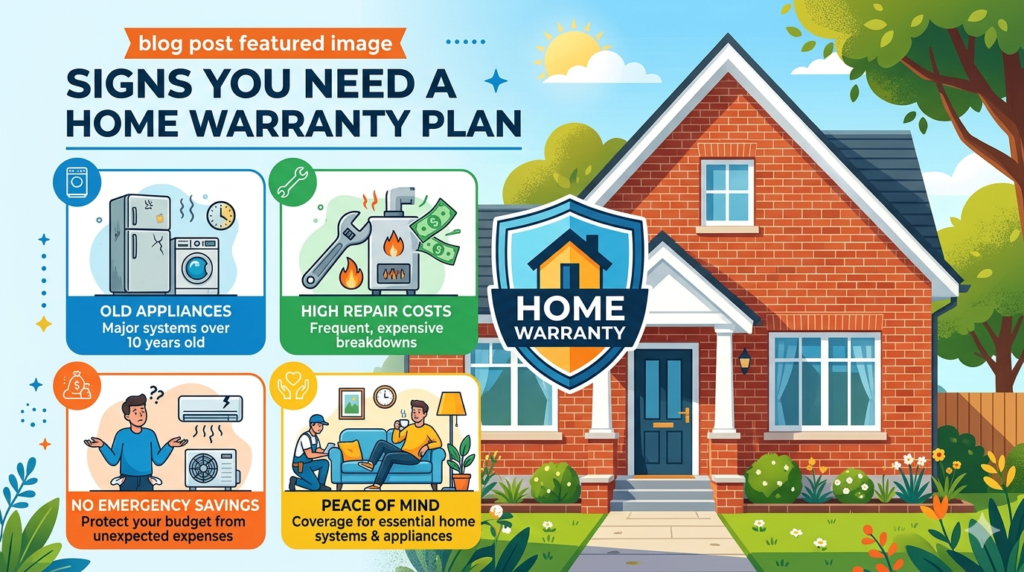
So how do you know when it’s time? That’s exactly what this post covers. We’re going to walk through the real signs you need a home warranty plan, the ones that actually matter, so you can make a smart decision before something forces your hand.
First, Let’s Get Clear on What a Home Warranty Actually Does
A home warranty is a service contract. You pay an annual or monthly fee. When a covered appliance or home system breaks down from normal use, the company arranges and helps pay for the repair or replacement.
Notice what it’s not: it’s not homeowners’ insurance. Your homeowners’ policy covers sudden damage, such as a tree falling through your roof or a pipe bursting from a storm. A home warranty covers the slow, boring breakdowns. The kind that comes from years of everyday use.
Think of it this way. If your water heater springs a leak because a pipe cracked in a storm, that’s insurance. If it just rusts out after 11 years of running every day, that’s a home warranty situation.
In 2026, most plans cost between $350 and $750 per year. Add a service call fee of $75 to $150 each time a technician visits, and that’s your total out-of-pocket cost for most repairs. Compare that to the actual cost of replacing an HVAC system, which runs $5,000 to $15,000, and a home warranty starts looking like a pretty reasonable trade.
The Signs You Need a Home Warranty Plan
Sign #1: Your Appliances Are Older Than 7 Years
Here’s a table that most homeowners should probably print out and stick on the fridge.
| Appliance | Average Lifespan |
|---|---|
| Refrigerator | 10–15 years |
| Dishwasher | 8–12 years |
| Washing machine | 10–14 years |
| Dryer | 10–13 years |
| Oven/range | 13–15 years |
| Garbage disposal | 8–12 years |
| Water heater (tank) | 8–12 years |
| HVAC system | 15–20 years |
Once appliances pass the 7-year mark, repair calls get more common. Parts wear out. Small issues turn into bigger ones. And when they’re no longer under any manufacturer warranty, every repair bill lands entirely on you.
If you’ve got a house full of appliances that have been running since 2015 or earlier, that’s one of the clearest signs you need a home warranty plan. They’re not dead yet, but they’re not young either.
Sign #2: You Just Moved Into a Home You Didn’t Build
Buying an existing home means inheriting everything the previous owner left behind. Their appliance choices. Their maintenance habits. Their “I’ll fix that later” decisions.
A home inspection helps — but it’s a snapshot of one day. The inspector can’t tell you that the HVAC hasn’t had a filter changed in two years, or that the water heater’s been making a knocking sound that the seller conveniently never mentioned.
Real example: A couple in Ohio bought a 1998 home and passed on a home warranty to save money. Four months in, the original furnace — which had been inspected- stopped working entirely. The replacement cost $7,800. They hadn’t budgeted for that. At all.
That’s not a rare story. It happens constantly to new homeowners buying older properties. If you’ve just moved in and you’re not 100% sure of the condition and age of what you’ve inherited, a home warranty plan is smart protection during that first year when surprises are most likely.
Sign #3: A Big Repair Bill Would Genuinely Stress You Out
This one’s less about your home and more about your finances. And there’s no judgment here — this describes most people.
Let’s look at what major home repairs actually cost in 2026:
| System or Appliance | Repair Cost | Full Replacement Cost |
|---|---|---|
| HVAC system | $300 – $2,500 | $5,000 – $15,000 |
| Water heater | $150 – $700 | $1,200 – $2,500 |
| Refrigerator | $200 – $600 | $800 – $3,000 |
| Plumbing (major) | $500 – $4,000 | varies |
| Electrical system | $200 – $2,500 | varies |
| Washer or dryer | $150 – $500 | $600 – $1,800 |
If looking at that table makes your stomach drop a little, that’s your answer. A home warranty turns those scary, unpredictable numbers into a flat, manageable annual cost. Most homeowners without any coverage spend between $2,500 and $6,000 a year on unexpected repairs. A solid home warranty plan costs a fraction of that.
Sign #4: You’ve Already Had Multiple Repairs in the Past 12 Months
One repair might just be bad luck. Two or three in a single year? That’s a pattern.
Here’s why it happens: most home systems and appliances were installed around the same time. They’ve been running for the same number of years. When one thing starts wearing out, others aren’t far behind. It’s not a conspiracy — it’s just math.
If the past year has included a plumber visit, a dishwasher repair, and a call about your HVAC making a weird noise, your home is telling you something. A home warranty plan now means the next thing on that list doesn’t come straight out of your savings.
Sign #5: Repairs Aren’t in Your Wheelhouse
Some people can fix anything. YouTube, a tool bag, and two hours on a Saturday, done.
Most people can’t. And that’s completely fine. But if you’re in the “I wouldn’t know where to start” group, every home breakdown becomes a multi-step production. Find a contractor. Check if they’re licensed. Get at least two quotes. Wait for a callback. Schedule the visit. Hope they show up on time.
That process takes time, energy, and often costs more than it should, especially if you don’t know what a fair price looks like for a given repair.
A home warranty simplifies all of it. One call or one online claim submission. The company sends a vetted technician from its network. You pay the service fee. Done.
It’s a bit like having a maintenance coordinator living in your phone. You don’t have to know anything about HVAC refrigerants or electrical panels. You just make the call.
Sign #6: You Own a Rental Property
Landlords have a different relationship with home repairs. It’s not personal, it’s professional. And when something breaks at a rental, time matters in a way it doesn’t always at your own home.
Tenants expect fast responses. A broken AC in July or no heat in February isn’t just inconvenient; it can become a legal issue in some states if not addressed within a required timeframe.
Home warranty plans for rental properties give landlords:
- Fast access to pre-screened contractors (often within 24–48 hours)
- A flat, predictable maintenance cost per year
- Potential tax deduction: Warranty premiums on rentals are often deductible as a business expense
- Less time spent finding and vetting contractors
If you’re managing one or more rental units with aging systems, a home warranty plan pays for itself in time saved alone.
Sign #7: Your HVAC System Is 10 Years Old or More
This one deserves its own spotlight — because HVAC failures are the most expensive and the most common reason homeowners file home warranty claims.
Most HVAC systems start showing their age around the 10-year mark. They don’t always fail immediately, but efficiency drops, repair frequency increases, and the odds of a major breakdown climb each year.
Here’s the thing about HVAC replacement: it’s not just expensive. It’s urgent. You can’t go without heat or AC for long. That urgency gives contractors leverage, and emergency HVAC service calls often cost more than planned ones.
Go outside right now. Look at the unit near your home’s exterior. There should be a label with the manufacturer or installation date. If it reads 2014 or earlier, you’re at 10+ years.
Pros and cons of HVAC coverage under a home warranty:
| Pros | Cons |
|---|---|
| Can save $5,000–$15,000 on replacement | Coverage caps may limit payout |
| Includes repairs, not just full replacement | Pre-existing issues may be excluded |
| Fast contractor dispatch during emergencies | Must use company’s assigned technician |
| Covers multiple components (compressor, coils) | Some plans require recent maintenance records |
If your HVAC is aging, having a warranty plan with solid HVAC coverage is one of the most financially sound decisions you can make as a homeowner.
Sign #8: You Don’t Have Time to Manage Home Repairs
Life gets busy. Really busy. And “find a plumber” is the kind of task that can sit on your to-do list for two weeks while the slow leak under your sink gets worse.
For homeowners who are already stretched thin — demanding careers, young kids, caregiving responsibilities, frequent travel, home repairs are a genuine stress. It’s not laziness. It’s just that there are only so many hours in a day.
A home warranty plan does the heavy lifting. Most providers let you file claims 24/7 online or by phone. They assign the contractor. They follow up on the appointment. You just have to be home when they show up.
For busy households, this alone is often worth the annual cost. It’s one less thing to manage.
Sign #9: You’re Planning to Sell in the Next Year or Two
This one surprises a lot of people. A home warranty isn’t just for buyers; it can actively help sellers, too.
Buyers are cautious, and rightfully so. A home warranty offered as part of the sale says: “We believe in this home, and we’re backing it up.” It reduces buyer hesitation and can make your listing stand out, especially if comparable homes aren’t offering one.
It also gives you a tool during negotiations. If an inspector flags your 12-year-old water heater, instead of giving a repair credit, you can point to the warranty coverage. Buyers feel protected. The deal keeps moving.
A one-year home warranty added to a listing typically costs $350 to $600 and can help prevent repair credit requests that often run $1,000 to $3,000. As a seller, that’s a favorable trade.
Sign #10: Nothing in Your Home Has Any Coverage Right Now
This is the simplest sign of all. If your appliances are past their manufacturer’s warranty, your systems have no service agreement, and you have no plan in place, you’re exposed. Everything that breaks is a full out-of-pocket expense.
That might be fine if your home is new and your savings are strong. But for most homeowners with a house that’s more than five years old, having zero coverage means you’re one bad month away from a financial hit.
Even a basic home warranty plan puts something between you and that.
A Quick Side-by-Side: Home Warranty vs. Homeowners Insurance vs. No Coverage
| Scenario | Home Warranty | Homeowners Insurance | No Coverage |
|---|---|---|---|
| HVAC breaks from age | ✅ Covered | ❌ Not covered | 💸 Full cost |
| Storm damages roof | ❌ Not covered | ✅ Covered | 💸 Full cost |
| Refrigerator stops working | ✅ Covered | ❌ Not covered | 💸 Full cost |
| Pipe bursts from freezing storm | ❌ Not covered | ✅ Covered | 💸 Full cost |
| Water heater rusts out | ✅ Covered | ❌ Not covered | 💸 Full cost |
| Fire damage to kitchen | ❌ Not covered | ✅ Covered | 💸 Full cost |
The takeaway: home warranties and homeowners’ insurance aren’t competing products. They cover completely different things. Most homeowners actually need both.
What Home Warranties Don’t Cover — Be Honest With Yourself Here
Before you sign up for anything, know what’s typically excluded. Most home warranty companies won’t cover:
- Known or visible pre-existing conditions before the plan started
- Cosmetic issues — scratched panels, cracked glass, dented doors
- Improper installation done by a previous owner
- Neglect or lack of maintenance — skipping annual HVAC service can void a claim
- Natural disaster damage — earthquakes, floods, fire (insurance territory)
- Code upgrades required during a repair
- Dollar amounts above coverage caps, many HVAC plans cap payouts at $1,500–$3,000 per term
That last one is important. If your HVAC replacement costs $9,000 and your plan caps coverage at $1,500, you’re still paying $7,500 out of pocket. Always check the caps before assuming you’re fully protected.
How to Choose a Plan That’s Actually Worth It
Once you’ve decided a home warranty makes sense, picking the right one matters. Here’s a straightforward process:
1. List what’s oldest in your home. Appliances? Systems? Know what’s most likely to need attention in the next 1–3 years.
2. Choose your coverage tier.
- Appliances only — good if your systems are newer, but your kitchen and laundry appliances are aging
- Systems only — good if your appliances are fine, but your HVAC/plumbing/electrical are getting up there
- Combo plan — best for older homes where both systems and appliances are aging
3. Compare service fees carefully. A plan with a $50/month premium and $150 service fee might cost more than one with a $60/month premium and $75 service fee — depending on how often you use it.
4. Read the exclusions before you pay. Not after. Before. That’s where the fine print lives.
5. Check claims reviews, not just star ratings. Look specifically for reviews about how the company handled a claim. A company with great sales service and awful claims support isn’t actually useful when something breaks.
Bottom Line
The signs you need a home warranty plan aren’t complicated. Older appliances. Thin savings. A home full of systems you didn’t choose. No time to manage repairs. All of these are real, practical reasons to get covered.
A home warranty won’t fix everything. Some claims get denied. Some coverage caps are frustrating. But for most homeowners with a home older than five years and no existing safety net, it’s a smart, affordable way to protect your budget from the repairs that are almost certainly coming.
The best time to think about this is before something breaks. That’s right now.
Next steps: Read our guides on how to compare home warranty companies, what home warranties don’t cover, and home warranty vs. homeowners insurance before you commit to a plan.