
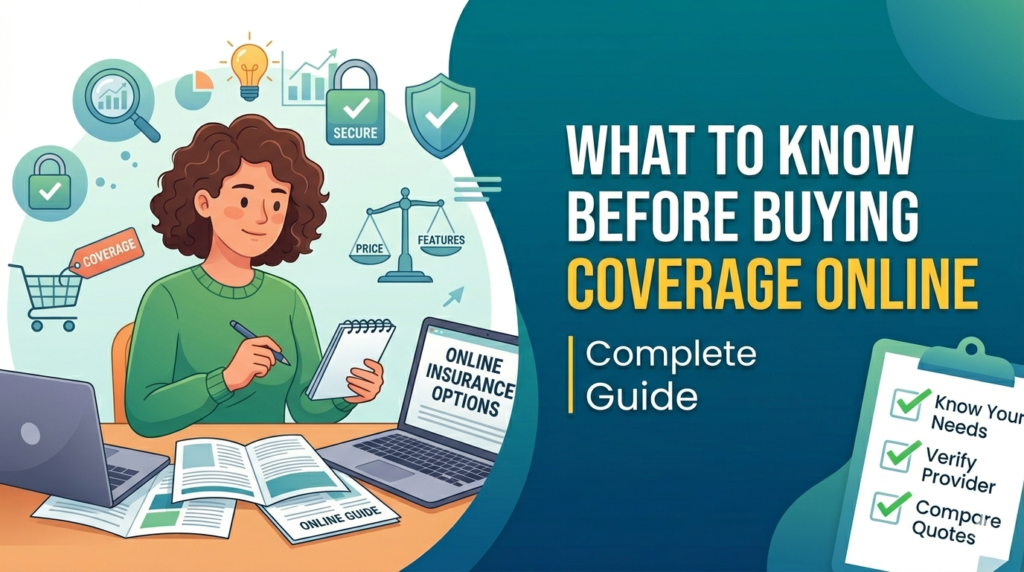
Shopping for insurance used to mean sitting across from an agent, shuffling through paperwork, and hoping you understood what you were signing. Today, millions of people are buying coverage online in minutes — from health and life insurance to auto and renters policies. The convenience is undeniable. But convenience can also lead to costly mistakes if you skip the steps that really matter.
Before you enter your payment details, here is everything you need to know to shop smart, protect yourself, and get coverage that actually works when you need it most.
Understand What Type of Coverage You Actually Need
The first step before buying coverage online isn’t to compare prices — it’s to understand what you’re shopping for. The digital insurance marketplace offers an enormous range of products, and it’s easy to purchase a policy that sounds right but doesn’t match your actual situation.
Ask yourself a few key questions:
- What am I trying to protect — my health, my income, my property, or my family’s financial future?
- Do I need coverage for a short-term period or long-term security?
- Are there legal minimums I must meet, such as with auto insurance?
- Do I have existing coverage through an employer or government program that would overlap?
Once you’re clear on your needs, you can filter out irrelevant products and focus your comparison on policies designed for your circumstances. Buying the wrong type of coverage — even at a great price — offers false security.
Compare More Than Just the Premium
Price is often the first thing people look at when buying coverage online, and it matters. But focusing solely on the monthly premium is one of the most common and expensive mistakes consumers make.
A low-premium policy frequently comes with trade-offs:
Higher deductibles. This is the amount you pay out of pocket before your insurance kicks in. A policy with a $200/month premium and a $5,000 deductible could cost you far more than a $280/month plan with a $1,000 deductible if you ever file a claim.
Lower coverage limits. Caps on what the insurer will pay per incident or per year can leave you exposed to significant financial loss.
Narrower networks or restricted coverage areas. This matters especially for health insurance — your preferred doctors and hospitals may not be in-network.
When comparing policies online, always look at the total cost of coverage — the premium plus the out-of-pocket maximum — not just the monthly payment.
Read the Fine Print: Exclusions Are Where Surprises Hide
Insurance policies are legal contracts, and what they don’t cover is just as important as what they do. Online platforms make it easy to click through to a quote, but many buyers never read the actual policy documents before purchasing.
Before you buy, look specifically for:
Named exclusions. These are events or circumstances the policy will not cover under any conditions — pre-existing conditions in some health plans, flood damage in standard homeowners policies, or intentional acts in liability coverage.
Waiting periods. Some policies have a window of time after purchase during which you cannot make certain claims. This is common in life insurance and some health plans.
Conditions and requirements. Some claims are only valid if you followed specific protocols — like notifying the insurer within 24 hours of an incident, or using approved service providers.
Reputable insurers provide a Summary of Benefits or a policy document you can download before purchase. Take the time to read it, or at a minimum, search for the word “exclusion” within the document.
Verify the Insurer’s Legitimacy and Financial Strength
Not every company selling insurance online is equally trustworthy — or equally solvent. When buying coverage online, you need confidence that the company will still be there to pay your claim months or years from now.
Here’s how to vet an insurer before you commit:
Check their license. Each country and state has an insurance regulatory authority. In the US, you can verify an insurer’s license through your state’s Department of Insurance website. In the Netherlands, the AFM (Autoriteit Financiële Markten) oversees financial services providers.
Review their financial strength rating. Independent agencies like AM Best, Moody’s, and Standard & Poor’s rate insurers on their ability to pay claims. Look for ratings of A- or higher.
Read customer reviews — carefully. Focus on reviews that mention the claims process, not just the sign-up experience. An insurer might make purchasing easy, but make claiming a nightmare.
Confirm the contact information is real. A legitimate insurer will have a verifiable physical address, phone number, and regulated customer service channels.
Understand How the Claims Process Works
The true test of any insurance policy is what happens when you file a claim. Before buying coverage online, research how the claims process actually works for that company.
Look for answers to these questions:
- How do you file a claim — online, by phone, or through an app?
- What documentation will you need to submit?
- What is the average claim processing time?
- Is there a dedicated claims handler assigned to your case?
- What happens if your claim is denied, and what is the appeals process?
Some online-only insurers have streamlined, app-based claims processes that are impressively fast. Others may route you through complex phone trees or third-party administrators. Knowing this in advance means no unpleasant surprises when you’re already dealing with a stressful situation.
Watch Out for Add-Ons and Upsells at Checkout
Online insurance platforms are designed to convert browsers into buyers — and that often means a checkout experience loaded with optional add-ons. Some of these riders and endorsements genuinely add value. Others are redundant or rarely useful.
Common upsells to evaluate critically include:
Accident forgiveness. Useful if you have a clean record and want to protect it, but may not be worth the cost if you’re already a high-risk driver.
Roadside assistance. If you already have this through your auto club or credit card, adding it to your policy is an unnecessary expense.
Extended replacement cost coverage. For homeowners, this can be genuinely important. For renters, it may be overkill.
Before checking any add-on box, ask whether you’d actually use it and whether you’re already covered elsewhere.
Keep Records of Everything
Once you’ve purchased a policy online, document everything from day one. Save or print:
- Your policy documents and certificate of coverage
- Your confirmation email and policy number
- Any chat transcripts or email correspondence with the insurer
- Receipts for your premium payments
Store digital copies in a secure, backed-up location and consider keeping a physical copy somewhere accessible. If you ever need to file a claim or dispute a decision, having a paper trail can make a significant difference.
Buying Coverage Online Can Be Smart — If You Do It Right
The ability to compare, customize, and purchase insurance policies online puts real power in the hands of consumers. You can get quotes in minutes, read reviews from thousands of customers, and often find competitive prices that beat traditional broker channels.
But that power comes with responsibility. No algorithm, comparison tool, or chatbot replaces the due diligence of understanding your own needs, reading your policy terms, and verifying who you’re trusting with your financial protection.
Take the time to do it properly. The few extra hours you invest before buying coverage online could save you thousands — and a great deal of stress — when it matters most.