
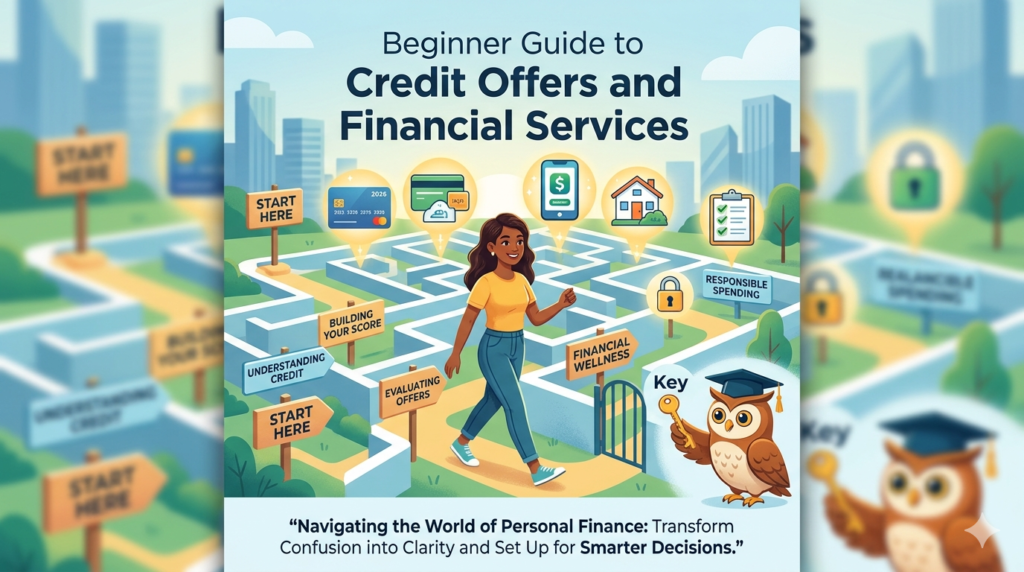
Beginner Guide to Credit Offers and Financial Services
Navigating the world of personal finance as a newcomer can feel overwhelming, like stepping into a complex maze without a map. Yet mastering credit offers and essential financial services forms the backbone of long-term stability and opportunity. This in-depth guide breaks down the fundamentals in straightforward language, offering practical steps tailored for 2026 realities.
Whether you’re fresh out of school, rebuilding after setbacks, or simply ready to take control of your money, you’ll find clear explanations, real-world strategies, and tools to help you move forward confidently. Let’s transform confusion into clarity and set you up for smarter financial decisions.
Why Credit and Financial Services Matter More Than Ever
Credit offers—ranging from flexible credit cards to structured loans—give you access to funds when you need them, while building a track record that opens doors to better rates and bigger goals like buying a home or car. Financial services go broader, covering everyday banking, savings growth, protection through insurance, and pathways to investing.
In 2026, with evolving scoring models that increasingly factor in rent and utility payments, beginners have more ways to demonstrate reliability even without traditional credit history. Responsible use turns these tools into wealth-building engines rather than burdens.
Core advantages of getting started wisely:
- Establishes a positive credit footprint for future needs.
- Unlocks rewards that put money back in your pocket.
- Provides a safety net for unexpected expenses.
- Builds discipline and financial confidence over time.
- Personal loans: /what-to-know-before-applying-personal-loans
- Insurance guide: /how-to-compare-insurance-quotes
- Affordable insurance: /best-ways-find-affordable-insurance-online
Decoding Your Credit Score: Your Financial Report Card
A credit score condenses your borrowing behavior into a number between 300 and 850. Lenders rely on it to gauge risk, directly impacting approval odds and interest rates you’ll pay. FICO and VantageScore remain dominant, though newer versions in 2026 weigh alternative data more heavily.
Primary factors influencing your score
- Payment consistency (35%) — Missing deadlines drags you down fastest.
- Credit utilization ratio (30%) — Using less of your available credit signals control.
- History length (15%) — Time builds trust.
- Recent applications (10%) — Too many hurt the short-term.
- Mix of credit types (10%) — Variety shows experience.
Score interpretation guide:
- 800 and above: Outstanding opportunities.
- 740–799: Strong position.
- 670–739: Solid and workable.
- 580–669: Fair, with room to grow.
- Below 580: Challenging, but improvable.
If you’re starting with limited or no history, focus on steady, small actions. Improvements often appear within months.
Actionable monitoring tip: Pull free reports weekly from AnnualCreditReport.com and use free apps or bank tools for score tracking.
Exploring Different Credit Offers Suitable for Newcomers
Credit Cards: Your Entry Point to Revolving Credit
These provide a reusable borrowing limit you repay monthly. They’re excellent for daily spending and building history when managed well.
Popular categories include secured options (backed by your own deposit), no-deposit starters, rewards-focused cards, and student-designed versions.
Loan Options
Personal loans offer fixed sums for varied needs with predictable repayments.
Auto financing uses the vehicle as security.
Education loans help fund schooling, often with favorable federal terms.
Short-term high-cost options like payday advances should be last resorts due to steep fees.
Emerging Alternatives
Buy-now-pay-later plans and personal lines of credit provide flexibility, but always calculate total costs.
Smart Steps to Select and Apply for Credit Offers
- Clarify your goals — Are you after simple cash back, travel perks, or pure credit building?
- Review your current standing to set realistic expectations.
- Shop around using pre-qualification tools that don’t affect your score.
- Scrutinize terms: APRs, introductory periods, annual fees, and penalty clauses.
- Apply thoughtfully — space out requests to protect your score.
Look for beginner-friendly features like no annual fees, extended 0% APR windows, and automatic progress reviews toward better products.
Top Beginner-Friendly Credit Cards in 2026
Here are standout choices based on current offerings:
- Chase Freedom Unlimited® — Versatile cash back on everyday spending with strong welcome incentives. Excellent for building long-term value.
- Discover it® Secured — Rewards potential plus deposit matching; often transitions to unsecured as you improve.
- Capital One Quicksilver — Straightforward 1.5% cash back with no annual fee and forgiving approval for beginners.
- Citi Double Cash® — Effective 2% back structure (1% on purchase + 1% on payment).
- Petal® 2 Visa® — Strong for limited history, combining rewards with accessible terms.
Secured starters worth considering: Discover it® Secured, Capital One Platinum Secured, and similar products that report to all major bureaus.
Always check issuer websites for the latest rates, fees, and bonuses, as they evolve.
Expanding into Broader Financial Services
True financial wellness extends past credit. Integrate these elements:
Everyday Banking Foundations
Open a reliable checking account for transactions and a high-yield savings account for growing your emergency cushion (target 3–6 months of expenses). Credit unions frequently provide lower fees and personalized support compared to big banks.
Debt and Borrowing Management
Learn the difference between revolving and installment debt. Tools like balance consolidation can streamline payments when rates make sense.
Growth Through Investing
Begin with employer 401(k) matches, Roth or Traditional IRAs, and low-cost index funds via robo-advisors. Start small and consistent.
Protection Layers
Secure health, auto, renters, and life coverage to shield against major setbacks.
Starter plan: Prioritize an emergency fund and automated savings before aggressive investing.
Proven Tactics to Strengthen Your Credit Profile
- Automate payments to never miss due dates.
- Maintain low balances relative to limits.
- Request to become an authorized user on a well-managed family account (with permission).
- Make small, regular purchases you repay immediately.
- Keep older accounts open to support the length of the history.
- Regularly review and correct report inaccuracies.
In 2026, positive rent and utility reporting through certain services can accelerate progress for thin files.
Avoiding Common Beginner Traps
Steer clear of carrying high balances that rack up interest, chasing rewards through unnecessary spending, or ignoring hidden fees. Applying for multiple products rapidly sends negative signals. Watch for unrealistic “guaranteed” offers that hide exorbitant costs.
Treat credit as a tool, not free money. Budget first, then spend.
Practical Daily Financial Habits for Lasting Success
Adopt the 50/30/20 budgeting framework: 50% essentials, 30% discretionary, 20% toward savings and debt. Set calendar reminders for bill reviews. Leverage fintech apps for spending insights and alerts. Continuous learning through reputable resources compounds your advantage just like interest does.
Frequently Asked Questions
Is it possible to qualify for a card with zero credit history?
Absolutely—secured cards and authorized user status provide accessible on-ramps.
How do credit cards differ from traditional loans?
Cards offer revolving access you reuse; loans deliver a one-time amount with a scheduled payoff.
How quickly can meaningful credit improvement happen?
Initial positive marks show in 1–2 months, with noticeable gains often in 3–6 months of consistent behavior.
Do credit unions offer advantages for newcomers?
Yes, they typically emphasize education, competitive rates, and community focus.
Is paying the full balance monthly necessary?
Highly recommended to dodge interest charges and fully enjoy the benefits.
Wrapping Up: Launch Your Financial Future Today
This beginner guide to credit offers and financial services equips you with the knowledge to make informed choices and avoid early missteps. Begin modestly—perhaps with a secured card or dedicated savings account—then layer on habits that promote steady growth. In time, these foundations support bigger aspirations like homeownership, travel freedom, or a comfortable retirement.
Finance is personal; align choices with your unique situation and seek nonprofit counseling when facing complexity. Start today, stay consistent, and watch your financial confidence flourish.
Disclaimer: This content is educational only. Verify current terms directly with providers and consider professional advice for your circumstances. Offers and regulations change.